


VA Home Care Eligibility: Do You Need a 100% Disability Rating?
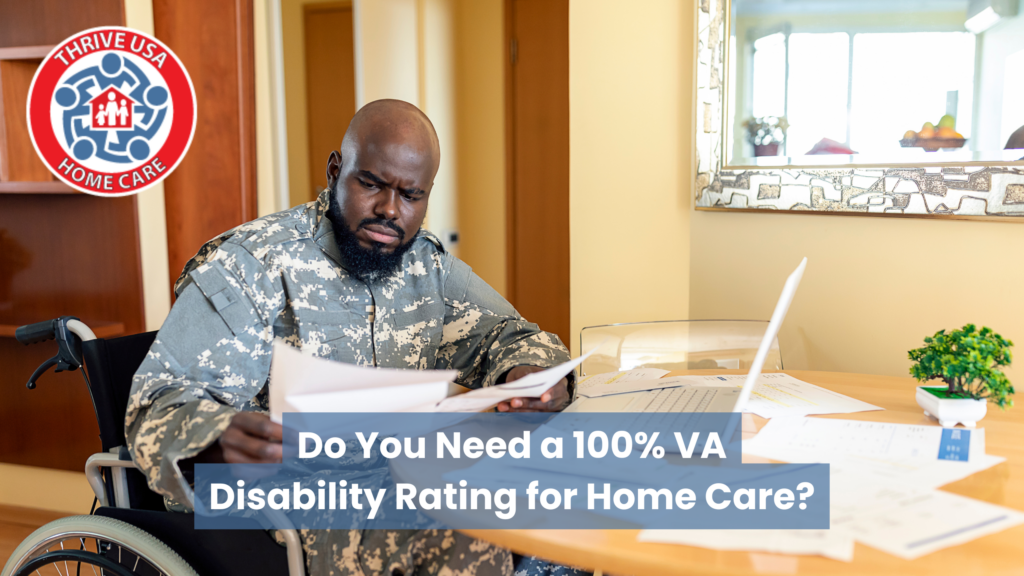
A common question among Veterans and families is whether VA home care eligibility requires a 100% disability rating.
The short answer is no. There is not one universal disability-rating requirement for every VA home care program.
Some services focus more on clinical need, VA health care enrollment, and whether the program is available locally. Other benefits have their own separate eligibility rules.
That is why it is important to look at the specific program instead of assuming a Veteran must be rated 100% disabled to receive help at home.
Do Veterans Need a 100% Disability Rating for VA Home Care?
Not necessarily.
The VA offers several types of home and community-based services. Eligibility can vary depending on the program.
For example, the VA states that enrolled Veterans may qualify for Homemaker and Home Health Aide Care if they are eligible for community care, meet the clinical criteria, and the service is available in their area. A 100% disability rating is not listed as a basic requirement.
The VA does note that a Veteran’s service-connected disability status can affect whether a copay applies.
What Matters More Than the Disability Rating?
For many VA home and community-based services, the Veteran’s actual care needs matter greatly.
The VA may consider whether the Veteran needs help with activities of daily living such as:
- Bathing
- Dressing
- Grooming
- Eating
- Toileting
- Moving safely
- Grocery shopping
- Other everyday tasks
Clinical need, VA enrollment, community care eligibility, and local availability can all affect access to services.
Veterans who need hands-on help with daily activities can also learn more about Thrive USA’s Personal Care services.
Homemaker and Home Health Aide Care
The VA’s Homemaker and Home Health Aide program can help Veterans remain at home instead of moving into a nursing facility.
A trained aide may assist with personal care and everyday activities.
According to the VA, enrolled Veterans may qualify when they:
- Are eligible for community care
- Meet the clinical criteria
- Have access to the service in their location
Again, the VA does not state that a Veteran must have a 100% service-connected disability rating to meet the basic eligibility requirements.
However, service-connected disability status may affect cost-sharing.
What About Veteran-Directed Care?
Veteran-Directed Care, or VDC, follows a similar structure.
The VA states that enrolled Veterans may qualify if they are eligible for community care, meet the clinical criteria, and the program is available where they live.
VDC gives qualifying Veterans more control over certain personal care services. Veterans or their representatives can help develop a spending plan and hire workers to provide approved support.
Thrive USA also has a full guide explaining how Veteran-Directed Care works.
Does VA Community Care Require a 100% Rating?
No.
VA Community Care has its own eligibility rules.
Veterans generally need to be enrolled in or eligible for VA health care and receive approval from their VA health care team before receiving community care, except in certain urgent or emergency situations.
At least one additional eligibility condition must also apply. For example, the VA may consider whether a needed service is unavailable at a VA facility, whether wait or drive times exceed standards, or whether community care is in the Veteran’s best medical interest.
A 100% disability rating is not one of the universal requirements listed by the VA.
Families can review Thrive USA’s Veteran Resources for more information about VA programs and benefits.
Some VA Programs Do Have Disability Requirements
This is where the topic becomes more complicated.
Not every VA benefit follows the same rules.
For example, the Program of Comprehensive Assistance for Family Caregivers, or PCAFC, currently requires the Veteran to have a service-connected disability rating of at least 70%, along with other requirements.
Thrive USA explains those requirements in our guide to the VA Caregiver Support Program.
Therefore, a Veteran may qualify for one type of home care support while not qualifying for another program.
What About Aid and Attendance?
VA Aid and Attendance is different from VA home health services.
It provides additional monthly payments to qualified Veterans and survivors who already receive a VA pension and meet specific care-related requirements.
For example, a Veteran may qualify if they need another person to help with daily activities such as bathing, feeding, or dressing. Other qualifying circumstances may include being largely bedridden, residing in a nursing home because of a disability, or meeting certain vision requirements.
A 100% disability rating is not the central requirement for Aid and Attendance. Instead, eligibility depends on pension status and the program’s specific criteria.
Can a Veteran With a Lower Disability Rating Still Get Home Care?
Potentially, yes.
A Veteran should not assume that a lower service-connected disability rating automatically disqualifies them from receiving home care.
For several VA home and community-based services, clinical need and program eligibility matter more than reaching a particular disability percentage.
At the same time, disability status can still affect costs, eligibility for certain programs, or access to other VA benefits.
That is why Veterans should review each program individually.
How Do Veterans Find Out What They Qualify For?
A good first step is speaking with a VA social worker or health care team.
Useful questions include:
- What home care programs are available in my area?
- Do I meet the clinical criteria?
- Am I eligible for Community Care?
- Does my disability rating affect my copay?
- Could I qualify for Homemaker and Home Health Aide services?
- Is Veteran-Directed Care available locally?
- Are there other benefits that may help cover care at home?
The VA also offers a Veteran Decision Aid for Care at Home or in the Community to help Veterans compare different types of support.
How Thrive USA Helps Veterans Navigate Home Care
VA benefits can be difficult to understand because different programs use different eligibility rules.
Thrive USA Home Care helps Veterans and families better understand their options and connect with resources that may support care at home.
Our home care services include personal care, companion care, caregiver respite, transportation assistance, and other support designed to help clients remain safe and independent.
A disability rating is only one part of the picture.
The best way to understand available options is to look at the Veteran’s needs, VA eligibility, location, and the specific program being considered.
Frequently Asked Questions
No. Several VA home and community-based services do not list a 100% disability rating as a universal eligibility requirement.
Possibly. Eligibility depends on the specific program, clinical need, VA enrollment, community care eligibility, and local availability.
It can. The VA states that service-connected disability status may affect copays for some services, including Homemaker and Home Health Aide Care.
No. VA home care programs provide services, while Aid and Attendance is an additional pension payment for eligible Veterans and survivors who meet specific requirements.
Veterans should speak with their VA social worker, case manager, or health care team to review available home and community-based services.